In some casesThe tent in Mina is no longer, simply a temporary shelter where pilgrims gather under a shared roof in complete equality. Growingly, it has evolved into a carefully designed hospitality environment, where levels of comfort and premium services live together with the spiritual significance and authenticity of the pilgrimage experience.
This transformation is reflected through air conditioned tents built to hospitality standards, elegantly furnished accommodation units, carefully curated dining experiences, and facilities that increasingly resemble modern luxury resorts, all within the heart of one of the most sacred gatherings on earth.
However, this growing phenomenon raises questions that extend beyond personal preferences or service expectations. It touches upon a deeper and more fundamental question:
What should Hajj represent in its essence and purpose?
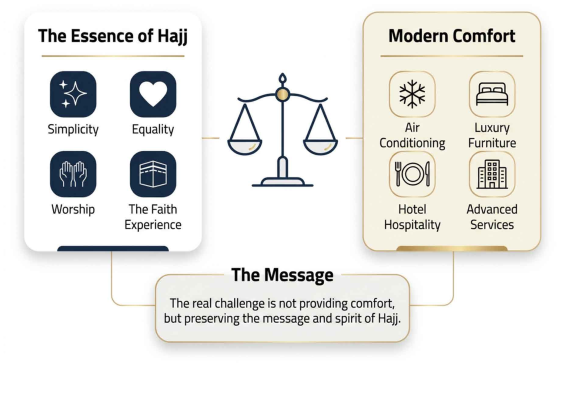
1) Comfort and spirituality: Is There a Real Conflict?
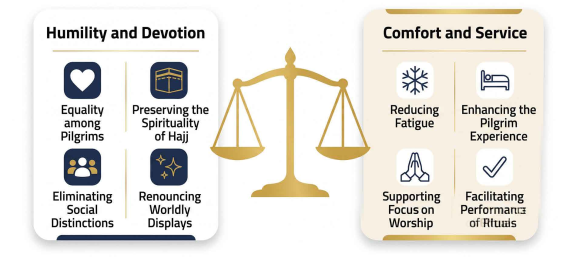
Supporters of enhanced services present a practical argument: a physically exhausted pilgrim, tired by extreme temperatures and the demands of a challenging journey, may find it difficult to fully dedicate themselves to religion and spiritual reflection.
From this perspective, high quality services serve as a necessary enabler, supporting the pilgrim's ability to perform the rituals with greater ease rather than competing with the spiritual purpose of Hajj.
Just as the major expansions of the Grand Mosque have not reduced the spirituality of the place, but instead enabled greater numbers of Muslims to perform their rituals with respect and comfort, improving service quality can be viewed within the same framework.
However, the opposing perspective carries equal depth and importance. The essence of Hajj is built upon the principle of detachment and equality: objectively from aware distinctions through the simplicity of Ihram, equality among all pilgrims regardless of status or wealth, and a spiritual experience that exceeds the differences of everyday life.
When over luxury begins to reshape social and economic divisions within this holy environment, the concern extends beyond aesthetics, it challenges the very message and purpose of the pilgrimage itself.
The real concern is not comfort itself, but when comfort becomes a measure of distinction between pilgrims in a place basically established to eliminate such distinctions.
2. From Service to Market: When a Spiritual Journey Becomes a Market Segment
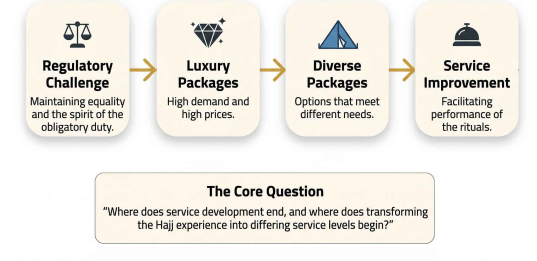
What transforms this discussion from a theoretical reflection into a practical industry issue is that the market has already moved in this direction. Luxury Hajj packages have become an established commercial category, with premium pricing and growing demand from pilgrims with higher purchasing power.
When Hajj season evaluation committees identified violations in some camps and coordinated the moving of forbidden facilities and services, it became clear that the distinction between "recognized service enhancement" and "unacceptable excess" is no longer only a theoretical or religious discussion, it has become a real challenge requiring clear standards and enforceable guidelines.
The deeper question extends beyond camps themselves and addresses the overall philosophy shaping the season:
Are we witnessing a legal evolution of the pilgrim experience, or a systematic segmentation of Hajj into different levels of access and quality?
Could the pilgrimage gradually shift from a shared human experience that unites millions into differentiated services that reflect financial status?
3. Hajj as a Strategic Positioning Tool: When Pilgrimage Enters the Prestige Economy
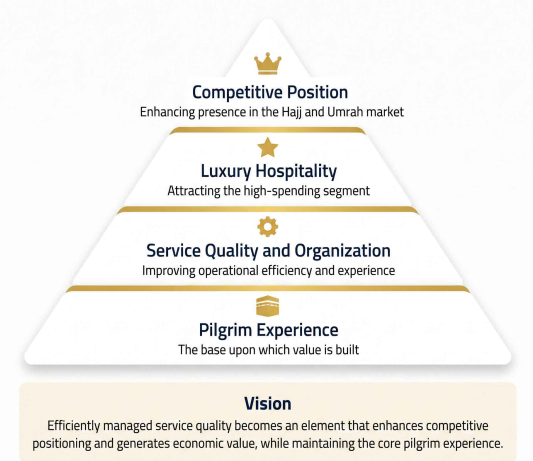
Current indicators reveal another important dimension that cannot be missed. Some countries and industry stakeholders have begun viewing premium service levels as a strategic competitive advantage within the growing Hajj and Umrah market, similar to how global tourism destinations compete to attract and keep luxury travelers.
Excellence in service quality is becoming an implicit brand indicator, reflecting operational capabilities and providing a powerful tool for attracting higher spending segments within a religious tourism market valued at hundreds of billions of dollars globally.
This transformation is not necessarily negative. It reflects economic maturity and advanced competitiveness. However, it requires responsible awareness:
What happens when Hajj begins to be shaped primarily through the language and mechanisms of the marketplace?
4. Toward Responsible Regulation That Preserves Balance and keeps the message.
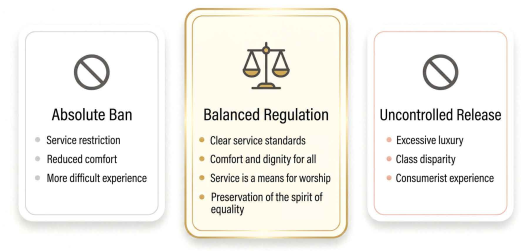
The balanced approach does not in completely rejecting premium services, nor in allowing unlimited commercialization without standards or oversight.
There is significant room to enhance service quality and improve the pilgrim experience, provided that service remains a means, not an end; a tool that supports religion and preserves dignity rather than distracting from the spiritual essence of the journey.
This requires establishing clear and obligated service standards that ensure a high level of comfort for all pilgrims regardless of financial capacity, while applying strict controls to prevent camps from becoming environments that recreate social divisions within a space fundamentally built on equality.
In the end
Comfort and spirituality should not be viewed as opposite concepts when comfort serves the spiritual purpose of Hajj and enhances the pilgrim's ability to pray.


