With the introduction of the regulatory framework controlling Umrah journeys for the 1447H season, the sector has entered a new phase of stricter governance and high standards. Under the new regulations, Umrah company contracts may only be documented if the company has no outstanding legal violations or previous organising punishment, supporting a clear message: compliance is no longer a recommendation, it is an essential for operating in the market.
Among the most notable requirements introduced are:
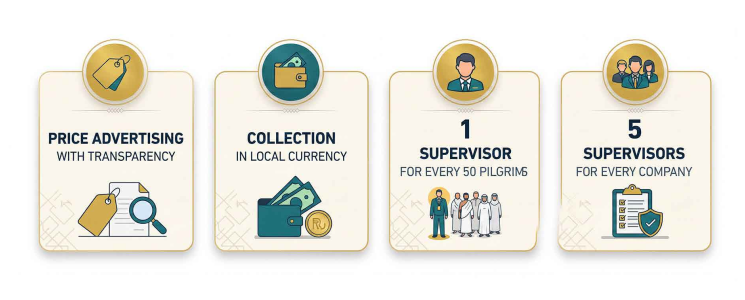
A minimum of five registered religious tourism supervisors for each company, including a legal representative.
One primary supervisor for every 50 Umrah pilgrims.
Collection of program fees exclusively in the local currency.
Transparent publication of package prices excluding transportation costs, helping eliminate pricing disputes with travelers.
Meanwhile, the Saudi authorities temporarily suspended the electronic services of several companies on the Nusuk platform as part of routine regulatory reviews ahead of Ramadan. The objective was to verify the accuracy of travel schedules, accommodation details, and operational data. The authorities confirmed that these measures were simply administrative and regulatory, not a market ban, and allowed the affected companies to continue serving pilgrims through partnerships with other licensed operators.
Safa Soft Insight
The relationship between regulators and Umrah companies is no longer built only on trust; it is now driven by real time, verifiable data. This marks a fundamental shift toward greater transparency and accountability, one that ultimately enhances the pilgrim experience while creating a stronger competitive advantage for companies that consistently comply with regulatory standards.


