Disruptions around the Strait of Hormuz contributed to rising oil prices, followed by increased aviation fuel costs, the second largest expense category for airlines and one of the industry's most critical operating factors.
As a result, the flight sector witnessed record level airfare increases, reduced capacity, and thousands of cancelled flights. While some airlines managed to lessen the impact through advanced fuel surrounded strategies, others particularly several U.S. based carriers experienced significant operational pressure.
The deeper challenge facing airlines in managing increased operating expenses while at the same time dealing with declining revenues. In addition, changing traveler behavior toward seeking greater value for money and choosing closer, more affordable destinations could prolong these pressures and reshape future airline network strategies.
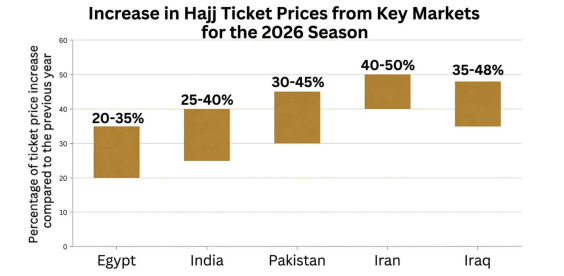
These challenges directly affected Hajj travel routes, with airfare increases from major source markets, including Egypt, India, Pakistan, Iran, and Iraq, ranging between 20% and 50% compared to the previous year.
In response to air disruption and rising costs, some markets adapted alternative solutions. For example, Iraq's Hajj and Umrah Authority shifted toward land transportation options to reduce exposure to aviation disruptions and escalating airfare costs.
For travel companies, the messages are clear: important flexibility is now required in package pricing, airline partnerships, and capacity planning. Traditional booking patterns are no longer enough, as seat availability and pricing are increasingly influenced by rapidly changing global conditions.


